
There’s a particular kind of quiet that happens right before you begin again. Maybe it’s been a few days since you rolled out your mat, maybe it’s been a few months, or maybe you’re standing at the edge of something entirely new — a fresh season, a fresh start, a fresh version of yourself. Whatever brought you here, that pause before you begin is not wasted time. It’s information. It’s your body and your mind asking for a moment to catch up with each other before you move.
As a yoga instructor, one of the most common things I hear from students is some version of “I don’t even know where to start.” And honestly? That’s a beautiful place to start from. Not knowing means you’re not on autopilot. It means you get to choose, on purpose, what this next chapter of your practice looks like.
What “Starting Anew” Really Means on the Mat
Overcoming the mindset of ‘not knowing where to start’ begins with adopting the right attitude. Check out Getting Started with Yoga: Being a Committed Yoga Student for practical tips on cultivating a consistent practice when starting out.
In yoga, there’s a concept called shoshin, or beginner’s mind. It’s the idea of approaching something — even something you’ve done a thousand times — with the openness, curiosity, and lack of judgment of a true beginner. No expectations about how deep your fold “should” be. No comparing this practice to the one you had last year. Just you, your breath, and whatever your body has to say today.
Starting anew doesn’t mean starting over from zero, and it definitely doesn’t mean punishing yourself for wherever you’re currently at. It means letting go of the story you’ve been telling yourself about your practice — too stiff, too busy, too out of shape, too far behind — and simply showing up as you are right now. That’s it. That’s the whole practice.
Why Slowing Down Is the Real Work
If you want to dive deeper into the practice of slow movement and surrender, explore our guide on Yin Yoga: Exploring the Depths of Stillness to learn how holding passive postures can calm your nervous system.
We live in a culture that rewards speed, and it’s easy to bring that same urgency onto the mat — rushing through sun salutations, scrolling through a to-do list in your head during savasana, treating stillness like something to get through rather than something to receive.
But slowing down isn’t the opposite of progress. It’s often the fastest way to actually hear what you need.
Physiologically, slowing your breath and your movement shifts your nervous system out of “go” mode and into rest-and-digest. That shift is what makes space for insight — the quiet realization mid-stretch, the answer to a question you’d been avoiding, the simple relief of just feeling your own body again. A pose like bridge, held a few breaths longer than feels efficient, can do more for your clarity than an hour of forcing your way through a flow you’re not present for.
Try this: the next time you’re in a pose, resist the urge to move on the moment it starts feeling “done.” Stay one or two breaths longer. Notice what shifts.
How to Listen to Your Thoughts (and Your Instincts) On and Off the Mat
Slowing down only helps if you also make room to actually listen. Here’s how to start building that habit, on your mat and off it.
Begin in stillness, not motion. Before you flow into anything, sit for sixty seconds. Hands resting, eyes soft or closed, nothing to accomplish. Let your first few thoughts surface without chasing them or arguing with them. This is where your intuition gets a chance to speak before your to-do list drowns it out.
Notice without judging. If a thought, an ache, or an emotion shows up mid-practice, you don’t have to fix it or explain it. Just notice it, the way you’d notice a cloud passing. “Oh, that’s tension in my shoulders.” “Oh, that’s the thing I’ve been avoiding thinking about.” Noticing is enough for now.
Let your body lead the pose, not the other way around. Instinct often shows up as a subtle pull — toward more twist, less depth, a longer hold, a different shape entirely. Your practice doesn’t have to match what’s on a schedule or an app. If your body is asking for child’s pose while everyone else is moving on, child’s pose is the right choice.
Keep something nearby to capture what surfaces. A journal, a notes app, even a voice memo. Some of the clearest thinking happens in that soft, unguarded space right after practice — don’t let it slip away just because you got busy again.
A 15-Minute Gentle Yoga Sequence for Beginners
You don’t need an hour or a perfect setup to start anew — you need about fifteen quiet minutes and permission to move slowly. This gentle sequence works anytime you need to reset, whether that’s after a long break or just a long week.
- Seated stillness (2 minutes). Sit comfortably, close your eyes, and simply notice your breath. No counting, no fixing — just observing.
- Cat-Cow (1 minute). Move slowly with your breath to wake up the spine and shake off any stiffness from sitting.
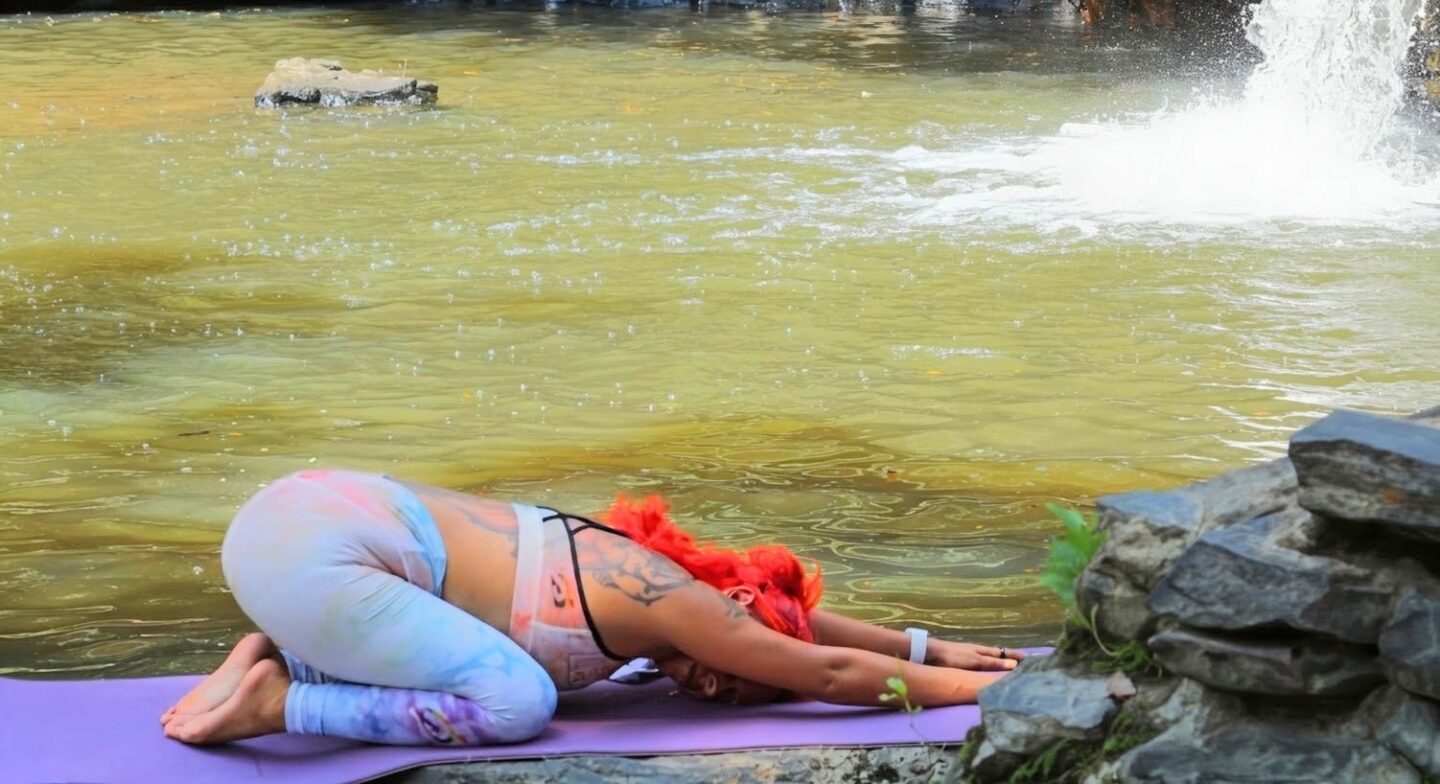
- Child’s Pose (2 minutes). Rest here fully. Let your forehead settle toward the mat and your breath lengthen. This is a pose of permission — permission to not be ready yet, and to begin anyway.
- Bridge Pose (3–5 breaths, repeat twice). A gentle, grounding backbend that opens the chest and reconnects you to your own strength without demanding much from you.
- Easy Seat with hands raised (2 minutes). Sit tall, breathe deeply, and set an intention — not a goal, just a quiet, honest sentence about what you need from this next chapter.
- Savasana (3–5 minutes). Let it all integrate. This is where the real listening happens.

Yoga instructor practicing Bridge Pose (Setu Bandhasana) during a gentle slow flow routine.Permission to Start Slow
If you take one thing from this practice, let it be this: you don’t need to earn your way back to the mat, and you don’t need to have it all figured out before you begin. Starting anew is not a single dramatic moment — it’s a series of small, honest choices to slow down, breathe, and trust what you already know deep down.
Whatever brought you to this page today, consider it your gentle nudge. Roll out the mat. Sit in the stillness for a minute before you move. Listen. You already have everything you need to begin.
Loved this practice? Follow The Yoga Chick on Instagram: https://www.instagram.com/TheYogaChick / Facebook: https://www.facebook.com/MariaTheYogaChick for more gentle flows, mindfulness tips, and real talk about showing up for yourself…on and off the mat.
My Favorite Essentials for Slowing Down On the Mat
This post may contain affiliate links, which means I may earn a small commission at no extra cost to you if you make a purchase. I only recommend products I genuinely use and love. Thank you for supporting The Yoga Chick!
My Go-To Yoga Mat A soft, grippy mat makes it so much easier to actually stay in a pose long enough to listen — no sliding, no distraction. Gruper Yoga Mat Non Slip
The Water Bottle I Never Practice Without Staying hydrated keeps your mind clear enough to actually notice what your body’s telling you. This one keeps water cold through even the longest, slowest practices. Simple Modern Insulated Water Bottle
Sunscreen for Outdoor Practice If you’re taking your practice outside (highly recommend it for a good reset), don’t skip the SPF. This is the one I keep in my mat bag. Native Mineral Sunscreen, Pear & Coconut Water
